Luxury entrances are becoming more than impressive thresholds. They set expectations through light, materials, proportion, and the first quiet moments of arrival. For homeowners and designers asking “what are the latest trends in luxury entrance design,” the answer increasingly combines visual impact with comfort, durability, and a sense of welcome.
The Global Wellness Institute’s 2024 Global Wellness Economy Monitor estimates that the wellness economy reached $6.3 trillion in 2023 and could approach $9 trillion by 2028. This is not an entrance-design survey, but it signals a wider interest in spaces that support wellbeing. At the front door, that can mean softer daylight, natural stone underfoot, a sheltered pause before entry, or discreet storage that keeps daily clutter out of sight. Details matter. So does restraint.
Industry research offers useful context, not a ready-made design formula. Houzz’s 2024 U.S. Houzz & Home Study tracks renovation activity and spending, but it does not establish which entrance styles luxury buyers prefer. That distinction is worth keeping in view. In 2026, polished brass, sculptural lighting, oversized pivot doors, and planted thresholds may all attract attention; none is automatically right for every home. A strong entrance responds to climate, architecture, access needs, and how residents actually arrive. Trends can inspire. They can also date quickly. This guide examines the materials, technology, and spatial choices shaping luxury entrances, while considering where current ideas deserve a second look.
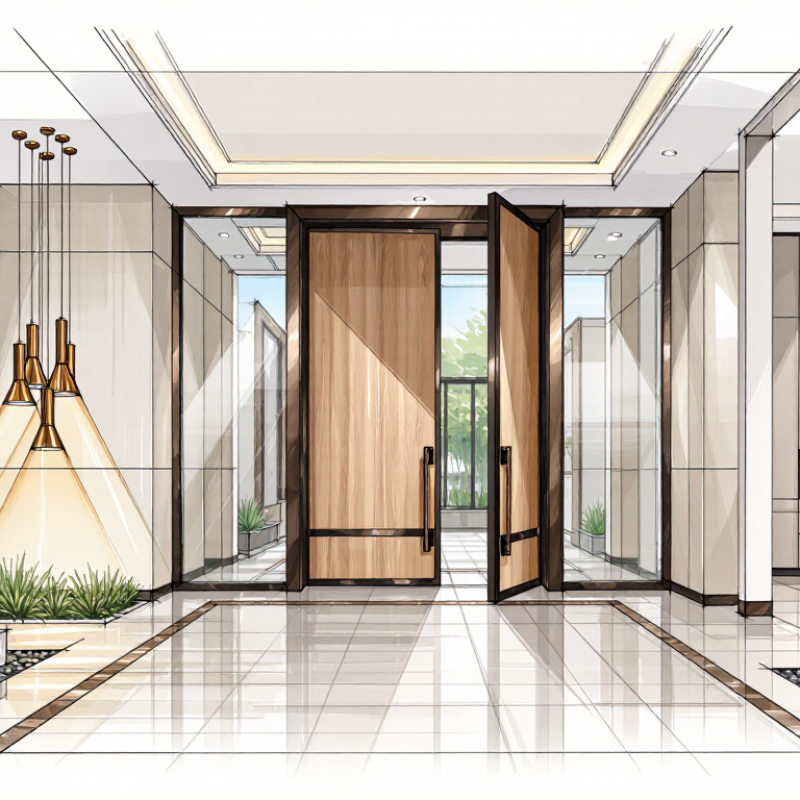
Luxury entrance design in China in 2026 is defined by a calm, useful arrival, not expensive finishes alone. A well-planned threshold makes room for shoes, parcels, keys, and a brief pause. The National Bureau of Statistics’ 2024 communiqué reported that 67.00% of China’s population lived in urban areas, while 310.31 million people were aged 60 or above. These figures do not dictate a style, but they underline why compact planning and comfortable movement matter. A flush shoe cabinet, low-glare lighting, a seated changing spot, and concealed charging can make the entrance feel considered. Small details matter.
Materials should feel refined but withstand daily use. Textured stone, warm-toned timber, and matte metal add depth without demanding a crowded display. Still, stone can look impressive and feel chilly; glossy surfaces also reveal dust quickly. That tension deserves attention. Layered lighting can soften the transition from a bright corridor to a home, while a discreet sensor light helps at night. Smart locks and connected lighting may add convenience, but visible wiring and complicated controls can undermine the calm. The strongest designs balance craftsmanship with easy maintenance, clear circulation, and a welcoming place to pause.
China’s luxury entrance design is shaped by more than a grand door. Traditional courtyards, layered thresholds, and timber screens offer useful ideas: they create privacy gradually, rather than exposing the living room at the first step. A stone floor can meet warm wood; a narrow view toward a planted courtyard can make arrival feel calm. Keep it quiet. These details work best when they suit the home’s proportions, not when copied as decoration.
The National Bureau of Statistics reported that China’s urbanization rate reached 66.16% in 2023, underscoring how varied residential settings can be. An entrance for a compact city apartment needs different planning from one opening onto a courtyard. The Global Wellness Institute’s 2024 Global Wellness Economy Monitor estimated wellness real estate at $438.2 billion worldwide in 2023. That figure is not a forecast for Chinese foyers, but it reflects rising attention to healthier spaces. Good entry design can support this through daylight, uncluttered storage, and clear circulation. Light matters. A carved screen may look refined, yet block daylight or complicate cleaning; sometimes the more culturally thoughtful choice is a simpler screen, with enough openness to keep the entrance practical.
China’s growing urban population is an important backdrop for entrance design, where a clear transition between busy public spaces and private interiors can be especially valuable.
Urban population as a share of China’s total population, selected years. Source: World Bank, World Development Indicators (SP.URB.TOTL.IN.ZS). The data provides demographic context; it does not measure design preferences.
China’s 2026 luxury entrances are moving beyond glossy stone toward tactile, layered finishes. Honed limestone, fluted oak, and brushed bronze create contrast without relying on shine. A narrow strip of dark metal beside pale stone can make a doorway feel precise, not showy. Keep it quiet.
Material choices also face a practical test. The 2024 Global Status Report for Buildings and Construction, published by UNEP and GlobalABC, estimates that buildings accounted for 32% of global energy use and 34% of energy-related carbon dioxide emissions in 2023. This is not an entrance-specific study, but it supports choosing durable surfaces and responsibly sourced materials. Reclaimed timber, low-emission finishes, and stone with documented sourcing can reduce waste and improve indoor comfort. Details matter.
For wet or dusty entryways, prioritize slip resistance and easy cleaning over delicate polish. A honed finish hides fingerprints better than a mirror gloss, though it may show stains if poorly sealed. Warm, imperfect textures feel inviting. Too much texture, however, can become visual clutter. Keep one surface expressive, and let the others recede.
China’s luxury entrances in 2026 are becoming responsive, not merely impressive. A concealed sensor can brighten a stone pathway as a visitor approaches. Smart intercoms let residents check who is outside before opening the door. Entry lighting can shift gently from cool daytime tones to warmer evening light. The effect feels personal. But it should never feel like a showroom demo. If every surface glows or speaks, the welcome can become tiring.
Tips: Place motion sensors where guests naturally pause, not where passing traffic triggers them. Keep a physical door control available. Test the system at night and during a power interruption.
Good design connects technology with clear, familiar routines. For example, a discreet screen near the entrance might show a visitor, while a soft chime alerts someone in another room. Use privacy-conscious settings, explain what sensors detect, and avoid collecting more information than the household needs. Materials matter, too: a fingerprint reader may be less reliable with wet hands, so offer another access method. Details like these require on-site testing. Smart entrances are not perfect, and poorly tuned automation can frustrate guests. The best experience gives people control without making them think about the technology.
Luxury entrance choices begin with the building, its setting, and the people who use it. A wide stone step may look impressive, but it can become awkward for strollers, luggage, or mobility aids. Measure the approach, door clearance, and turning space before choosing decorative features. Scale matters. Climate also guides material selection: rain, strong sun, and freeze-thaw cycles affect finishes differently. Choose surfaces that stay secure underfoot and can be maintained with locally available care. Warm lighting should reveal the handle and threshold without shining directly into visitors’ eyes.
Tips: Test samples outdoors at different times of day. Check how wet stone feels underfoot. Keep the entry path clear, and plan discreet lighting near steps and locks.
Privacy, security, and the transition from outdoors to indoors deserve equal attention. A recessed doorway can offer shelter, while a side window may bring daylight without exposing the whole interior. Consider sightlines from the street and how the entrance connects to the foyer. Luxury does not always mean more ornament. One carefully proportioned door, a tactile handle, and a clean threshold can feel more considered than several competing details. Still, restraint can become too plain if materials lack texture or warmth. Review the design from the pavement, not only from a polished drawing.
It combines a calm arrival with useful storage, clear movement, and durable materials. Expensive finishes alone are not enough. Small details matter.
A flush shoe cabinet, a small seat, low-glare lighting, and concealed charging can help. Keep pathways clear for residents carrying bags or parcels.
Layered thresholds and timber screens can create privacy gradually. Use them only when they fit the home; an overly dense screen may block daylight.
A compact apartment needs efficient storage and careful circulation. A courtyard home may allow a planted view or a more spacious pause.
Textured stone, warm timber, and matte metal add depth. Stone can feel cold, while glossy surfaces show dust quickly. Consider the upkeep.
Motion lighting can brighten the path, and an intercom can help residents check who is outside. Keep physical controls available. Test it at night.
Place sensors where guests naturally pause, and explain what they detect. Choose privacy-conscious settings and collect only necessary information.
No. Poorly tuned lights or complicated controls can frustrate guests. A fingerprint reader may also struggle with wet hands, so provide another access method. The system may still need adjustment.
Luxury entrance design in China in 2026 brings together elegance, cultural meaning, and practical comfort. Rather than relying on decoration alone, a well-designed entrance creates a calm, welcoming transition between public and private spaces. Traditional ideas such as balance, natural harmony, and thoughtful spatial sequencing can inform contemporary architecture without making it feel like a historical replica. For homeowners exploring what are the latest trends in luxury entrance design, the focus is on refined proportions, subtle cultural references, and a strong connection to the surrounding landscape.
Material choices help shape this impression: natural stone, warm-toned wood, textured surfaces, and carefully controlled lighting add depth and durability. Smart technology is also becoming part of the experience, with discreet access systems and responsive lighting designed to improve convenience while preserving a serene atmosphere. The most suitable approach depends on the building’s architecture, local climate, privacy needs, maintenance expectations, and the preferences of its residents.

Med Door