A home office can look harmless: a laptop on the desk, charging cables by the wall, and paper files beside a space heater. Yet concentrated equipment and everyday combustibles can make fire separation worth considering. That is one reason homeowners ask, “why invest in fire-rated doors for home offices” in 2026? The answer is not simply to buy a door with a label. A rated door is part of an assembly, including its frame, hardware, installation, and ongoing condition. Details matter.
Fire researcher Steve Kerber, director of UL’s Fire Safety Research Institute, studies how fires develop and affect occupants. A careful paraphrase of the practical lesson in this work is: “A fire door can help only when the complete assembly is properly selected, installed, and maintained.” It is not a promise of safety, and it cannot replace alarms, an escape plan, or sound electrical practices. Still, a suitable door may help slow fire and smoke movement between a home office and adjoining rooms. Check the door’s rating, compatible hardware, and installation requirements; local building and fire guidance can vary. Keep the doorway clear. Inspect the closer and seals. A sticking latch or damaged edge deserves attention. Homeowners can overlook these small defects, and that is worth admitting. The following outline explores the practical benefits, selection criteria, maintenance needs, and limitations of fire-rated doors for home offices.
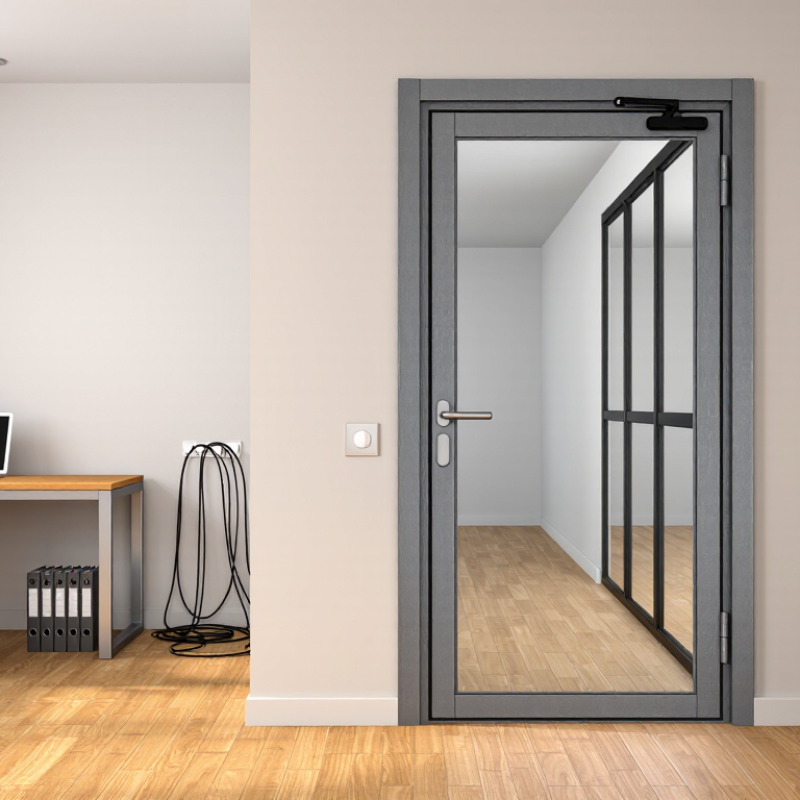
A fire-rated door is a tested assembly, not simply a heavy door. Its rating applies to the door, frame, hinges, latch, and other specified parts working together. During a fire, intumescent strips can expand when heated, helping close gaps; smoke seals can limit smoke leakage. A working closer helps keep the door shut. Details matter. A rating indicates performance under a defined test, not a guarantee against every real fire.
NFPA’s Home Structure Fires report, covering 2015–2019, estimated an annual average of 344,000 U.S. home structure fires and 2,620 civilian deaths. A rated door between a home office and another area may help slow fire spread and provide more time to respond. It cannot replace smoke alarms or safe electrical practices. Small gaps matter. A door wedged open, a loose latch, or an incompatible frame can undermine the assembly. For a home office, check the rating label and installation instructions, and have the closer and latch inspected. It is easy to overtrust the label; the surrounding hardware deserves attention, too.
| Dimension | What It Means | Practical Relevance for a Home Office |
|---|---|---|
| Fire-resistance rating | A fire door is tested as part of an assembly to resist fire for a specified period. Commonly encountered ratings include 20, 45, 60, 90, and 180 minutes; available ratings and their permitted uses depend on the applicable building code and wall assembly. | A rating is not a universal guarantee or a recommendation for every house. Check local requirements and the rating of the wall where the door will be installed. |
| How the door works | The door, frame, hardware, glazing (if any), and installation details work together to help limit the passage of flames and heat through an opening for the tested period. | The benefit depends on keeping the complete assembly in serviceable condition; replacing one component with an incompatible item can undermine its intended performance. |
| Door and frame | Fire-rated doors are made from materials and constructions tested for a stated use. The frame must be compatible with the door and installed according to the assembly’s instructions. | A rated door slab fitted into an unsuitable frame should not be assumed to provide a rated opening. Confirm that the door and frame are approved for the intended configuration. |
| Label and documentation | A certification label or other approved marking identifies the door’s fire rating and permitted conditions of use. Documentation can specify installation, hardware, and maintenance requirements. | Keep the label legible and retain installation records. Do not rely on appearance alone to determine whether a door is fire-rated. |
| Self-closing and latching | Where the applicable code or approved assembly requires them, a closer returns the door to its closed position and a latch holds it shut. | A door that is routinely left open may not provide the intended protection. Follow local requirements and never prop open a door that is required to self-close. |
| Gaps and seals | Listed assemblies have limits for clearances and may require specific seals or edge components. Intumescent materials can expand when exposed to heat, but their use and placement depend on the tested design. | Avoid unapproved trimming, drilling, or changes to seals. Have excessive gaps or damaged components assessed against the manufacturer’s instructions and local rules. |
| Glazing and hardware | Vision panels, glazing, locks, hinges, and other hardware must be permitted for the specific rated assembly; ordinary glass or hardware is not automatically suitable. | If visibility or a lock is important for the office, select only components supported by the door’s approved listing and installation instructions. |
| Fire versus smoke protection | A fire-resistance rating describes performance under a specified fire test. Smoke-control performance is a separate consideration and may require additional testing, seals, or code provisions. | Do not assume that every fire-rated door is smoke-tight. Check whether smoke control is required for the location and choose a compatible assembly. |
| Maintenance | Routine checks should look for damage, loose or missing hardware, obstructed closing, altered openings, and problems with latching or seals. | Regular inspection helps identify issues early. Repairs and modifications should follow the assembly instructions and any local inspection requirements. |
| Code and suitability | Whether a home office needs a fire-rated door depends on factors such as building type, location, construction, and local code. Requirements differ by jurisdiction and may change over time. | Before purchasing or remodeling in 2026, confirm the applicable requirements with the local building department or a qualified building professional. |
Note: This table provides general information, not a determination of code compliance. Requirements and approved assemblies vary by location and application.
It applies to a tested assembly, including the door, frame, hinges, latch, and specified seals. Details matter.
No. It may slow fire and smoke spread, but it cannot prevent every danger. Not a guarantee.
Check the opening, surrounding wall, required rating, and installation instructions. Confirm the frame and hardware suit the same assembly.
No. Use parts approved for the door assembly. A mismatched latch or closer can stop the door from closing properly.
The door should close and latch without sticking on carpet or office cables. Avoid trimming it or drilling new holes without checking its listing.
Where applicable, inspections are commonly required at least annually. Local requirements vary, so check with a qualified professional.
Check that the door closes and latches from fully open. Look for damaged edges, holes, missing labels, or absent seals.
No. A wedged-open door cannot close as intended. Even a small obstruction can matter.
No. It is one layer of protection, not a substitute for alarms or safe electrical practices. I’d also recheck the doorway after moving furniture.
A fire-rated door is designed and tested to resist fire and heat for a specified period when installed as part of a compatible door assembly. In a home office, potential hazards can include overloaded outlets, computers and other electronics, chargers, paper storage, and heating equipment. Knowing why invest in fire-rated doors for home offices can help homeowners make a practical safety choice: a suitable door may slow the spread of flames and smoke, create more time to leave the building, and help limit damage to nearby rooms and belongings.
When choosing a door in 2026, consider its fire-resistance rating, materials, dimensions, hardware, seals, and compatibility with the existing frame and intended location. The complete assembly matters, so professional installation can help ensure the door closes and latches properly. Follow the manufacturer’s care instructions, keep the doorway unobstructed, and inspect the door, seals, hinges, and latch regularly for damage or changes that could affect operation. Routine maintenance helps the door remain ready to perform as intended.

 Med Door