A front door should welcome visitors, protect your home, and keep its appearance for years. Yet many homeowners notice faded panels, uneven color, or a dull finish after only a few summers. If you are searching “why does my front door fade in direct sunlight,” the answer usually begins with ultraviolet radiation. Strong UV rays slowly break down pigments, protective coatings, and surface materials. Heat can accelerate this damage, especially on dark-colored doors facing south or west.
Material choice also matters. Solid wood may develop dry patches, while painted fiberglass can lose color when its coating lacks UV resistance. Steel doors can fade too, particularly when factory paint is thin or poorly cured. In practical inspections, the most exposed areas often show the change first: the upper panel, handle side, and trim near glass. These details can reveal how sunlight travels across the entrance each day.
Reliable manufacturers should provide clear coating specifications, maintenance guidance, and realistic color-retention information. Look for exterior-grade finishes, UV-stable pigments, weather-resistant sealants, and tested surface treatments. A reputable China front door supplier should explain these features without promising permanent color. That promise deserves caution. No finish remains untouched forever.
Shade helps. So does periodic cleaning and timely resealing. However, product quality, installation, climate, and wall orientation all influence fading. The explanation is not always simple. Understanding these factors can help you compare China’s best front doors more carefully and choose a finish suited to your home’s actual sunlight exposure.
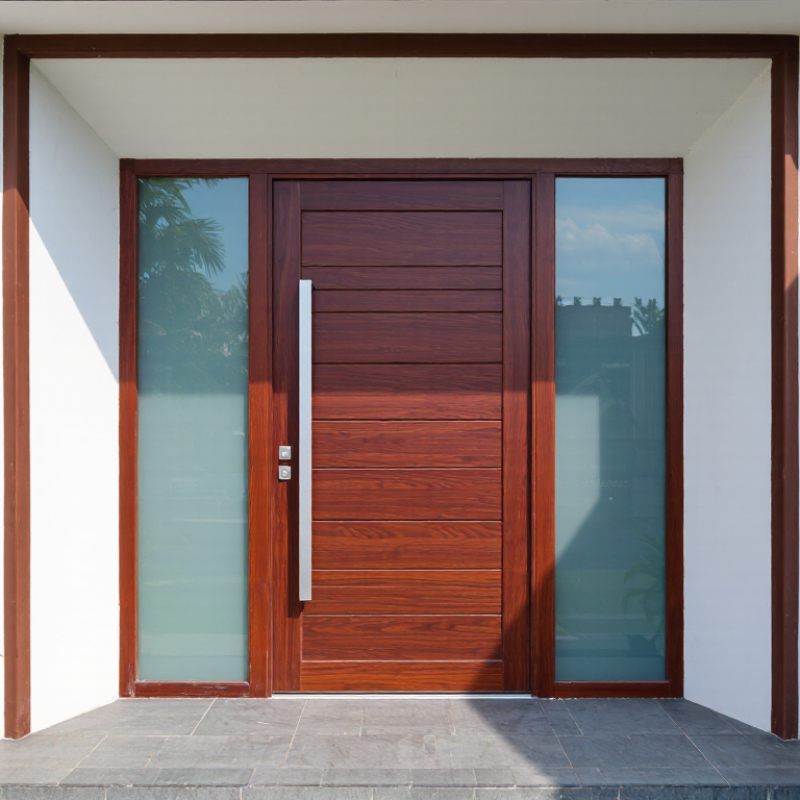
A front door fades in direct sunlight because ultraviolet radiation breaks down pigments and protective coatings. South- and west-facing doors usually receive the harshest exposure. Afternoon heat can raise the door surface temperature dramatically, especially beneath a dark finish. This repeated heating expands the surface and stresses the coating. Small cracks may appear before the color visibly changes.
Material also matters. Solid wood can lose color unevenly as its fibers absorb and release moisture. Fiberglass doors often resist fading better, but their surface coating can still weaken without proper protection. Steel doors may develop faded areas when heat builds behind the finish. Reflected sunlight from pale walls, windows, or concrete can intensify the damage. I have seen a door fade faster near a bright stone walkway than under ordinary exposure.
Poor maintenance makes the problem worse. Dust can hold moisture against the surface, while harsh cleaners may remove protective layers. A UV-resistant exterior finish helps, but it must suit the door material and local climate. Inspect the top edge, lower corners, and areas near glass every few months. These spots often change first. I once underestimated reflected heat during an inspection. That mistake reminded me to check the surrounding surfaces, not just the door itself. Shade, correct sealing, and timely refinishing can slow fading, though no exterior finish remains perfect forever.
Direct sunlight can fade a front door because ultraviolet (UV) radiation breaks down pigments, coatings, and resin binders. Visible light can also affect some colors, while infrared radiation raises the surface temperature and accelerates coating aging.
The chart shows approximate sunlight energy at Earth's surface: about 5% ultraviolet, 43% visible light, and 52% infrared. UV is the main photochemical cause of fading, while heat from infrared radiation can speed up the aging of finishes. Actual fading depends on exposure time, door orientation, color, coating quality, and local climate.
China Best Front Doors: Why Does My Door Fade in Sunlight?
Sunlight damages doors through ultraviolet radiation and heat. UV energy breaks down pigments, resins, and wood lignin near the surface. The USDA Forest Products Laboratory explains that prolonged UV exposure can cause wood fibers to gray, weaken, and lose their original color. Painted and composite doors can fade too. Their finishes may become chalky, brittle, or uneven.
Heat accelerates this process. ASHRAE solar design data uses clear-sky surface radiation approaching 1,000 W/m² during strong summer conditions. A dark door facing west can become noticeably hotter by late afternoon. Repeated heating and cooling may also expand panels, stress joints, and create tiny finish cracks. This damage is often mistaken for poor material quality. Sometimes, installation and exposure matter more. A shaded door and an exposed door rarely age alike.
Tips: Choose UV-resistant exterior coatings and verify their testing claims. ASTM G154 is commonly used to evaluate accelerated UV and moisture exposure. Add a deep canopy, especially above west-facing entrances. Clean dust and salt gently; abrasive scrubbing can remove protective layers. Inspect edges, hinges, and lower panels every season. Recoat before the finish looks severely damaged. One overlooked detail is irrigation water. Mineral spots can concentrate heat and leave permanent marks.
| Door Material or Finish | Typical UV Response | Heat-Related Risk | Common Visible Damage | Relative Fade Risk | Recommended Protection |
|---|---|---|---|---|---|
| Solid wood | UV exposure breaks down surface coatings and gradually changes the wood’s natural color. | Repeated heating and cooling can cause expansion, shrinkage, checking, and joint movement. | Fading, gray or yellow tones, peeling finish, surface cracks, and uneven color. | High | Use a UV-resistant exterior coating, seal all edges, maintain the finish regularly, and add an overhang or shade. |
| Engineered wood | The outer veneer or coating can fade when exposed to prolonged direct sunlight. | Heat and moisture changes may stress joints, veneers, and exposed edges if sealing is inadequate. | Color variation, blistering, edge swelling, veneer lifting, or coating failure. | Medium to High | Choose a factory-applied exterior finish, protect cut edges, and inspect the bottom and hinge edges regularly. |
| Fiberglass composite | The composite is generally stable, but the paint, stain, or clear coat can fade under UV radiation. | Dark colors absorb more solar energy and may increase surface temperature and coating stress. | Faded color, chalking, gloss loss, or small cracks in an aged coating. | Medium | Use an exterior acrylic or polyurethane system rated for UV exposure and follow the finish manufacturer’s maintenance schedule. |
| Steel | UV rays mainly affect the paint or protective film rather than the steel itself. | Steel conducts heat efficiently; temperature changes can stress coatings and affect door operation. | Fading, chalking, blistering, scratches, and rust at damaged or unsealed areas. | Medium | Use a high-quality exterior coating, repair scratches promptly, and keep drainage and sealant joints in good condition. |
| Aluminum | Anodized or powder-coated surfaces can lose color or gloss after long-term UV exposure. | Aluminum heats and cools quickly, which can contribute to thermal movement and seal wear. | Gloss reduction, color fading, chalking, and sealant deterioration. | Low to Medium | Select a coating designed for exterior exposure, clean the surface with mild soap, and avoid abrasive cleaners. |
| PVC or uPVC | Unprotected plastic can discolor or become brittle; UV-stabilized formulations perform better. | High heat can increase thermal expansion and may cause movement in frames, seals, or panels. | Yellowing, fading, brittleness, warping, or seal compression. | Medium | Use UV-stabilized material, light-colored finishes, shade, and non-abrasive cleaning products. |
| Clear varnish or lacquer | Clear films allow visible light and some UV energy to reach the substrate unless UV absorbers are included. | Heat accelerates oxidation and can make the film soften, embrittle, or fail sooner. | Ambering, cloudiness, cracking, peeling, and loss of gloss. | High | Use a UV-resistant exterior product with sufficient film thickness and renew it before the substrate becomes exposed. |
| Opaque exterior paint | Pigments and binders gradually degrade; darker and highly saturated colors often show fading sooner. | Dark surfaces absorb more solar radiation and can experience greater coating expansion and contraction. | Color shift, chalking, powdery residue, cracking, peeling, and reduced gloss. | Medium to High | Use light-reflective, UV-resistant exterior paint, apply the correct primer, and maintain consistent film coverage. |
A front door facing strong sunlight can fade because ultraviolet radiation breaks down pigments, coatings, and wood lignin. The 2021 USDA Forest Products Laboratory Wood Handbook explains that UV exposure changes wood color and weakens its surface fibers. Dark finishes often show this damage sooner. They absorb more heat.
Fiberglass usually offers the strongest balance of sunlight resistance, dimensional stability, and low maintenance. Its molded surface does not absorb moisture like wood, and quality exterior coatings can include UV-resistant pigments.
Insulated steel doors also resist sunlight well, but scratches can expose metal and encourage corrosion. The U.S. Department of Energy describes steel and fiberglass doors as generally more durable and lower-maintenance than wood doors. Still, performance depends heavily on coating quality.
Wood has genuine visual warmth, but it needs disciplined maintenance. A clear finish may require renewal every few years, especially on a south-facing entrance. The USDA report notes that exposed wood weathers at the surface, so neglected coatings can leave gray fibers and small cracks. ASTM G154 accelerated UV testing helps compare finishes, yet it cannot perfectly predict every climate. NFRC energy labels measure heat performance, not fading resistance. That distinction is easy to miss. Even fiberglass can fade when a low-quality dark coating meets intense afternoon sun.
Sunlight fades front doors through ultraviolet radiation, heat, and repeated moisture changes. Dark colors usually absorb more heat, so their surface may age faster. Poor preparation can also cause peeling, especially on doors facing south or southwest. In practical inspections, fading often appears first around the handle, lower edge, and exposed panels.
When choosing a fade-resistant front door in China, check the surface coating before the color sample. Look for an exterior-grade finish with UV-resistant pigments and strong adhesion to the door material. Powder-coated metal can perform well when properly applied, while solid wood needs an exterior coating and regular renewal. Fiberglass doors may resist sunlight effectively, but their coating quality still matters. Ask for test data, coating thickness, and outdoor exposure records. A showroom sample is not enough.
Installation affects durability too. A deep entrance canopy can reduce direct sunlight and rain. Ensure the frame drains water correctly, and avoid dark colors on fully exposed elevations unless the coating is highly durable. Clean the surface with mild soap, not abrasive chemicals. Inspect small cracks every spring. One mistake is assuming “fade-resistant” means “fade-proof.” It does not. Even a carefully selected door can change slightly after years of harsh sun, so maintenance planning should be part of the purchase decision.
Strong sunlight can fade a front door through ultraviolet exposure, heat, and repeated moisture changes. Dark finishes usually show uneven color faster. A south-facing entrance may develop pale strips around the handle, letter slot, or glass panel. Heat adds pressure. I have seen doors that looked acceptable from the street but felt dry and rough at arm’s length.
Prevention begins with shade and a suitable exterior finish. Install an overhang, canopy, or light-filtering screen where practical. Clean the surface gently every few months, because dirt can hold moisture against the coating. Apply a UV-resistant exterior sealer according to the manufacturer’s instructions. Do not coat a damp door. Check the top and bottom edges carefully; these areas often absorb water first. A small hidden test patch can prevent a large repair mistake.
For a faded surface, photograph the damage and identify the existing finish before sanding. Wash it, let it dry fully, then remove loose or peeling material. Lightly sand rough areas, but avoid cutting through veneer or decorative layers. Apply matching stain or exterior paint in thin coats, following the wood grain. Color matching is imperfect, especially after years of weathering. I would rather accept a slight difference than cover sound material with an overly thick coating. If the door is swollen, cracked, or soft near the edges, consult a qualified door technician before refinishing.
Ultraviolet rays break down pigments, coatings, and wood fibers. Heat speeds up this damage. Dark colors often fade sooner.
Fiberglass often provides strong sunlight resistance and stable dimensions. It also needs less maintenance than wood. Coating quality still matters.
Steel generally handles sunlight well. However, scratches can expose metal and allow corrosion. Repair damaged areas promptly.
Wood absorbs moisture and weathers at the surface. Its finish may need renewal every few years. Unprotected wood can turn gray and crack.
Yes. A deep canopy or overhang can reduce direct sunlight. West-facing doors especially benefit from afternoon shade.Shade helps.
Wash it gently with suitable cleaning materials and soft tools. Avoid abrasive scrubbing. It can remove protective layers.
Photograph the damage first. Identify the existing finish, wash the door, and let it dry completely. Remove loose material, then sand lightly.Thin coats work better.
Test the stain or paint on a hidden area first. Apply thin coats along the wood grain. Exact color matching may remain imperfect.That is normal.
Check the top and bottom edges, hinges, lower panels, and areas around hardware. Look for cracks, roughness, swelling, or peeling.Small damage grows.
Yes. Mineral spots may collect on the surface and concentrate heat. Gently remove deposits before they leave permanent marks.
A front door can lose its original color when it is exposed to strong sunlight for long periods. If you wonder, “why does my front door fade in direct sunlight,” the main causes are ultraviolet rays, heat, moisture changes, and low-quality surface coatings. UV energy breaks down pigments and weakens protective finishes, while heat can cause expansion, cracking, peeling, or uneven discoloration. Different materials also respond differently: solid wood may fade and dry out, painted metal can lose color or develop surface damage, and composite or fiberglass doors often provide better resistance when properly finished.
When choosing a fade-resistant front door in China, consider the local climate, sun exposure, material quality, coating performance, and available maintenance support. Light or UV-stable colors, protective topcoats, shaded entrances, and weather-resistant seals can help reduce damage. Regular cleaning and inspections are useful, while lightly sanding, refinishing, or repainting may restore a sun-faded surface when discoloration has already appeared.

Med Door