An analytical breakdown of advanced aluminum alloy manipulation, thermal insulation thresholds, and international building code mandates.
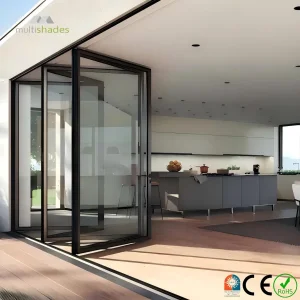
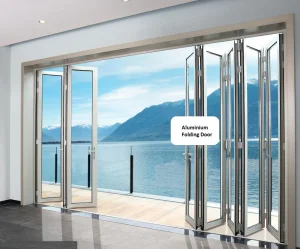
The contemporary global construction landscape is witnessing a structural shift toward dynamic, high-exposure building envelopes. Modern fenestration systems are no longer treated as passive partitions; they are active elements that define a building's thermodynamic profile, spatial structural efficiency, and structural safety parameters. Within this technical paradigm, high-performance aluminum bi-fold doors have emerged as the standard for commercial complexes, premium coastal residential developments, and high-density urban developments.
As structural requirements demand larger clear openings without sacrificing thermal performance, traditional structural frames often fail due to deflection limits and wind-load pressures. Our engineering team at Suzhou Med Door Technology Co., Ltd. addresses these challenges by processing premium 6063-T5 aluminum extrusions, incorporating advanced polyamide thermal break profiles (PA66 GF25), and utilizing precision-calibrated heavy-duty roller systems. These mechanisms ensure reliable long-term operations across variable global climates, supported by strict compliance with European CE standards and international quality verification frameworks.
Dedicated architectural engineering and physical testing cycles.
High-tensile extruded aluminum profiles for structural deflection control.
W/(m²·K) performance meeting stringent global energy codes.
Fully vetted tracking under ISO9001, ISO14000, and EN standards.
How engineering departments, international distributors, and commercial developers evaluate high-performance fenestration assets.
For B2B procurement directors, commercial architects, and large-scale developers, purchasing architectural fenestration requires thorough validation of physical performance metrics. Our aluminum bi-fold solutions are engineered to meet strict operational baselines. Wind load capacity is structurally designed to withstand localized pressures up to Class C5 (EN 12210), preventing sash deformation under high-altitude or coastal wind pressures.
Water tightness is maintained via multi-tier EPDM gasket arrays and integrated weeping channels, achieving classifications that exceed standard commercial build regulations. From an acoustic perspective, the integration of insulated double or triple glazing options yields acoustic attenuation indices up to Sound Transmission Class (STC) 42, which is essential for hospitality and commercial structures in dense airport or urban perimeter zones.
Hardware durability governs the practical lifecycle of large-scale accordion installations. Our structural configurations feature bottom-supported, precision-machined stainless steel tandem carriages with integrated guide rollers. This transfers structural loads directly to the sub-floor track assembly, preventing head-track sag and smooth operation over extended operational cycles.
Every structural profile variation undergoes physical cycle testing up to 100,000 continuous opening and closing sequences without showing measurable structural degradation or mechanical fatigue. This low-maintenance reliability minimizes operational cost footprints for asset owners and commercial property managers globally.
Optimized cross-sectional moment of inertia prevents sash bowing under extreme wind loading conditions.
Qualicoat-approved powder coats and clear anodized finishes resist salt spray corrosion up to 3,000 hours.
Co-extruded vulcanized rubber barriers ensure continuous compression seals along the entire folding perimeter.
Inside Suzhou Med Door Technology Co., Ltd.'s precision production facilities and automated fabrication workflows.
As recognized industry leaders awarded titles such as "Exemplary Organization of Quality Management" and "Top Ten Famous Enterprises in the Industry," our production infrastructure reflects advanced manufacturing standards. Med Door Factory combines high-capacity mechanical automation with precise manual quality control protocols across all manufacturing phases.
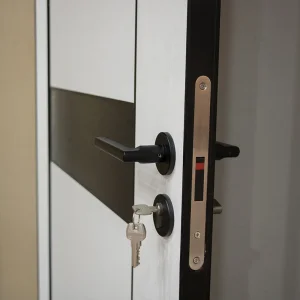
Our automated extrusion machining lines employ multi-axis CNC milling units capable of holding dimensional tolerances to within ±0.5mm. This extreme precision ensures that locksets, multi-point engagement hardware, and hinge pins sit flush within their designated internal pockets, eliminating manual rework requirements at job sites.
By establishing full digital tracking protocols throughout our supply chain, from the raw aluminum ingot to the final containerized maritime shipment, we manage raw material fluctuations and maintain consistent lead times. Our operational management systems adhere strictly to the ISO9001 and ISO14000 standards, providing global infrastructure procurement teams with reliable, auditable compliance documentation.
Beyond machining precision, our facility houses an integrated environmental simulation lab where prototype frame designs are subjected to accelerated weather loading. We test for structural resilience under extreme UV exposure, cyclic thermal shocks ranging from -30°C to +60°C, and direct mechanical pressure simulations.
This systematic scientific vetting supports our commitment to providing long-lasting solutions. It ensures that every container leaving our factory meets the strict standards demanded by markets in North America, Western Europe, and Australia, strengthening our position as a preferred structural supply chain partner.
Adapting thermal break architectures to diverse climatic conditions and strict commercial architectural specifications.
In regions facing extreme seasonal sub-zero conditions, thermal bridging can cause interior frost formation and elevated building energy expenditure. Our thermal break bi-fold systems use 24mm to 34mm wide polyamide structural barriers reinforced with multi-cavity insulation inserts. When coupled with argon-filled low-emissivity triple glazing configurations, these profiles maintain warm interior surface temperatures, preventing condensation and lowering localized HVAC system runtime.
Marine environments require robust defenses against atmospheric salt spray and accelerated structural oxidation. We treat our structural extrusions with multi-stage chemical pre-treatments before applying heavy-duty architectural powder coatings. All exterior hardware components, including carriers, hinges, and multipoint locking handles, are cast from grade 316 stainless steel to eliminate galvanic corrosion vectors and ensure long-term smooth operation.
Retail and hospitality venues require clear access zones and safe pedestrian egress paths. Our commercial-grade bi-fold assemblies can be configured with specialized low-profile recessed tracks that mount flush with interior floor finishes. This design meets strict accessibility criteria while maintaining weather protection via concealed drainage channels and heavy-duty brush seals.
Modern luxury residential projects place a premium on minimal sightlines and expansive views. Our slimline bi-fold series features interlocking stiles with profiles as narrow as 120mm. This maximizes glass surface area while maintaining the structural rigidity needed to handle individual sash weights up to 120 kg, smoothly connecting interior living spaces with exterior natural surroundings.
Direct engineering feedback clarifying technical performance limits, hardware mechanics, and international export certifications.
 Med Door